
Purpose Hire

Author: Purpose Hire

  • People Management

    People Management

    Could you make the world better by working in People Management?

    Many high-impact organizations fail not because of poor ideas or funding gaps, but because of weak people systems. This field—often viewed as a simple support function—is actually one of the most powerful levers for social impact. In both the Indian and global context, organizations face rapid scaling, high emotional labor, and limited leadership bandwidth.

    People management is not for everyone; it involves a deep personal responsibility for the performance, wellbeing, and long-term growth of others. For those with the right fit, building an organization’s internal infrastructure is what allows great ideas to actually reach the people who need them.

    What do we mean by People Management?

    Strategic people management is very different from administrative HR like payroll or contracts. It is the art of designing systems that allow individuals and teams to perform at their best over time while staying aligned with the organization’s mission and values.

    This work covers several critical areas that determine an organization’s health:

    • Talent Acquisition: Finding people who are not just skilled, but deeply aligned with the mission.
    • Performance Systems: Designing feedback loops that encourage growth rather than just policing tasks.
    • Leadership Development: Identifying and grooming the next generation of social sector leaders.
    • Wellbeing: Building resilience against “compassion fatigue” and burnout in high-stress environments.

    Why People Management is often underestimated in impact careers

    People management rarely appears on “high-impact career” lists because its influence is often indirect and invisible. Unlike a doctor or a teacher, a people manager’s success looks like stability rather than a sudden transformation. When a system works perfectly, nothing “breaks,” which means the work often goes unnoticed.

    This invisibility leads to underinvestment in people systems—and how that underinvestment quietly erodes program quality, staff morale, and organizational longevity. Impact is often slow-moving and hard to attribute, which makes it easy for organizations to prioritize immediate programmatic needs over the long-term health of the team.

    How does People Management create impact?

    People management creates impact indirectly by improving how organizations function, rather than by delivering services themselves. While frontline roles produce visible outputs—such as students taught or patients treated—people managers strengthen the internal systems that shape how decisions are made and how consistently work is executed.

    In impact organizations, where outcomes depend on coordinated effort over long periods, improvements in internal functioning significantly affect external results. Organisational effectiveness acts as a multiplier for impact. Small improvements in hiring quality, management practices, or team culture can compound across programs and over time, allowing organizations to expand responsibly without stalling.

    Where do People Management roles exist in India’s impact ecosystem?

    These roles are present across a wide range of mission-driven organizations:

    • Nonprofits and NGOs: Supporting program teams working in challenging field conditions.
    • Philanthropic Foundations: Managing diverse portfolios of specialist staff and grant managers.
    • Social Enterprises: Balancing commercial pressures with social missions.
    • CSR and Hybrids: Operating at the intersection of corporate structures and social objectives.

    The nature of the work varies by organizational stage. In early-stage organizations, people management is often informal and blended with operations. As organizations mature, the focus shifts toward formal systems, leadership pipelines, and compliance.

    How much impact can one person in People Management really have?

    Impact in people management tends to be unevenly distributed and heavy-tailed. Most people managers contribute modest but meaningful improvements to organizational functioning, such as better retention or improved team morale. While these may not transform outcomes on their own, they support steady progress.

    However, a small number of people managers have a disproportionate impact by enabling critical organizational shifts. This often occurs during:

    • Rapid Scaling: When an organization doubles or triples in size within a year.
    • Leadership Transitions: When a founder steps back and a new leader takes over.
    • Cultural Change: When an organization needs to pivot its mission or values.

    Advantages of pursuing People Management as an impact career

    This career path offers high leverage by influencing entire teams rather than individual outputs. By supporting multiple employees and leaders, people managers amplify their influence across programs and long-term time horizons.

    Key advantages include:

    • High Leverage: You are a “force multiplier” for everyone else in the organization.
    • Transferable Skills: Capabilities in coaching and org-design work globally in any sector.
    • Career Capital: This path builds a systemic perspective that is highly valued in senior leadership roles.
    • Systems-Level Influence: You get to shape the “rules of the game” for how work gets done.

    Downsides, trade-offs, and risks

    The role involves significant emotional labor. Handling conflict, burnout, and sensitive personal situations can be draining, especially in resource-constrained environments. Additionally, success in people management is often invisible; preventing problems rarely attracts recognition, which can affect motivation and career progression.

    People managers frequently operate with high responsibility but limited authority. Balancing care for individuals with accountability to organizational goals can create ethical tension and professional strain. For those used to visible, individual achievements, the “behind-the-scenes” nature of this work can be a difficult transition.

    Is People Management a good fit for you?

    This path suits individuals who are comfortable with being responsible for others’ performance and wellbeing. Since decisions often have long-term implications for careers and organizational culture, an interest in systems rather than personal recognition is essential.

    The most successful people managers typically possess:

    • Emotional Resilience: The ability to stay calm during team crises or conflicts.
    • Tolerance for Ambiguity: Making decisions when there is no clear “right” answer.
    • Deep Empathy: Understanding the “on-the-ground” reality of frontline workers.
    • Strategic Patience: Knowing that cultural change takes years, not weeks.

    Final reflection: When is People Management one of the highest-impact choices?

    People management is a strong choice when organizational effectiveness is the binding constraint on impact. In contexts where the ideas and funding are available but the team is struggling to execute, improving people systems can unlock significant progress. It is less suitable for those seeking immediate or highly visible impact, as this path rewards patience, systems thinking, and long-term commitment. Honest self-assessment is essential before choosing it as a career direction.

  • Operations

    Operations

    Could Operations be the Silent Engine of Social Impact?

    If leadership is the vision and programs are the heartbeat, Operations is the nervous system of an organization. In the social sector, “Operations” is often an umbrella term for the complex machinery that keeps the mission alive. It is the art of translating high-level strategy into ground-level reality. While other roles focus on what the organization does, Operations focuses on how it gets done—ensuring that resources, people, and processes move in perfect synchrony.

    In the global development landscape, especially in regions like India with massive geographic and logistical hurdles, Operations is where impact is won or lost. A brilliant healthcare intervention is useless if the cold-chain logistics fail; a world-class curriculum means nothing if the schools aren’t staffed or the materials aren’t delivered. This is a career for the “Master Orchestrator”—the person who finds deep satisfaction in efficiency, reliability, and scale.

    The Strategic Architecture of Operations

    Operations in a mission-driven organization is far more than just “admin.” It is about building a scalable and resilient platform for change. It typically covers several interconnected domains:

    • Supply Chain & Logistics: Managing the movement of goods and services to remote or resource-constrained areas.
    • Infrastructure & Technology: Building the digital and physical tools—from CRM systems to field offices—that enable staff to work effectively.
    • Process Engineering: Designing “Standard Operating Procedures” (SOPs) that ensure quality remains consistent as the organization grows from one village to one hundred.
    • Risk & Crisis Management: Developing the protocols that protect staff and assets during political instability, natural disasters, or health crises.

    Why Operations is the Ultimate Scaling Lever

    Operations is the primary constraint on how fast a social organization can grow. Many nonprofits hit a “growth ceiling” not because their ideas are bad, but because their internal systems break under the weight of more people and more data.

    The “Operational Multiplier” works like this: an Operations lead who improves the efficiency of a field team by 20% through better scheduling or digital tools has effectively increased the organization’s impact by 20% without hiring a single new program staff member. In this way, Operations is the most direct path to Scale. It is the science of taking a “pilot project” and turning it into a “national movement.”

    Where Operations Leaders Thrive

    The demand for operational excellence spans the entire Organisational Leadership & Management category:

    1. Large-Scale NGOs: Acting as a Chief Operating Officer (COO) to manage thousands of employees across diverse geographies.
    2. Philanthropic Foundations: Helping grantees “institutionalize” by advising them on how to build robust back-end systems.
    3. Humanitarian Response Agencies: Leading rapid-deployment logistics in the wake of emergencies where every hour saved translates to lives saved.
    4. Government Partnerships: Designing the delivery mechanisms for large-scale public schemes, ensuring that “last-mile” delivery actually happens.

    Advantages: The Power of the “Generalist-Specialist”

    • Total Organizational Visibility: You are one of the few people who understands how every department fits together. This makes you an indispensable partner to the CEO.
    • Tangible Problem Solving: Unlike advocacy or policy work, which can take decades to show results, operational improvements often show results in weeks. You can see the system getting better in real-time.
    • High Transferability: The ability to manage a supply chain or design a process is a “universal skill.” You can move from education to healthcare to climate change without skipping a beat.
    • Leadership Pipeline: Operations is the most common “stepping stone” to becoming a CEO or Executive Director, as it provides the most comprehensive view of how an organization actually survives and thrives.

    The Hard Trade-offs: The Weight of Responsibility

    The biggest challenge in Operations is that you are often the “Safety Net.” When something goes wrong—a truck breaks down, a server crashes, or a field office is flooded—it is an “Ops problem.” This can lead to a high-pressure, 24/7 environment, especially in humanitarian or fast-growing contexts.

    Furthermore, success in Operations is often silent. If the lights are on, the salaries are paid, and the programs are running smoothly, no one notices the Operations team. You only get noticed when something breaks. This requires a leader who is internally motivated and doesn’t need constant public accolades to feel successful.

    Is Operations Management a Good Fit for You?

    This path is designed for the “Pragmatic Builder.” You should consider this career if:

    • You are the person who instinctively starts organizing the logistics when a group of people is trying to make a plan.
    • You find “waste” (of time, money, or effort) physically painful and have a drive to optimize.
    • You enjoy the “nitty-gritty” of details but never lose sight of the “big picture” mission.
    • You are a “People Person” who also loves “Process”—you understand that a system only works if the humans involved believe in it and can use it.

    Final Reflection: The Last Mile is the Longest Mile

    In the impact sector, there is a famous saying: “Vision without execution is just hallucination.” Operations is the discipline of execution. By choosing a career in Operations, you are choosing to be the bridge between a beautiful idea and a changed life. You are the one who ensures that the promise made in a boardroom is actually kept in the field.

  • Social Enterprise Leadership

    Is Social Enterprise Leadership the Ultimate Hybrid Career?

    The traditional boundary between “doing good” and “making money” has collapsed. Social Enterprise Leadership is the art of navigating this collapse. Unlike a traditional NGO founder who relies on grants, or a corporate CEO who focuses solely on shareholder returns, a social enterprise leader builds a “Double Bottom Line” organization. This means the business is designed so that every unit of revenue generated is inextricably linked to a unit of social or environmental impact.

    In the global and Indian markets, this role has become the frontier of innovation. From providing clean energy in rural villages to building fair-trade supply chains for artisans, these leaders are proving that the market can be a tool for justice. It is a career for the “tri-sector athlete”—someone who can speak the language of government, community, and venture capital with equal fluency.

    The Dual Mandate: Balancing Mission and Market

    The core challenge of this role is “Mission Drift.” As a business scales, the pressure to cut costs or increase margins can often come at the expense of the social goal. A Social Enterprise leader spends their days in a constant state of calibration.

    • Business Viability: You must build a product or service that people actually want to buy. If the business fails, the social mission dies with it. This involves traditional leadership tasks like product-market fit, unit economics, and customer acquisition.
    • Embedded Impact: The “good” cannot be an afterthought or a CSR project. It must be baked into the operations. For example, if you run a sustainable clothing brand, your impact is measured by the living wages of your weavers, not just the organic cotton you use.
    • Capital Stack Strategy: These leaders must be experts in “Blended Finance.” They often manage a mix of equity, debt, and “patient capital” from investors who are willing to accept lower financial returns in exchange for high social returns.

    Why this is the Highest-Leverage Leadership Role

    Social Enterprise Leadership offers a unique form of “Systemic Impact.” Because these organizations are market-based, they have the potential to scale far faster than organizations that depend on the whims of donors. Once a social enterprise becomes profitable, it becomes a self-sustaining engine of change.

    Furthermore, these leaders act as proof-of-concept for the rest of the economy. By building a successful business that prioritizes the planet or marginalized communities, they force traditional corporations to rethink their own models. They don’t just solve a problem; they change how the “market” perceives value.

    Where the Opportunities Exist in the Global South

    The ecosystem for social entrepreneurship is booming, offering several distinct paths for leadership:

    1. Founding a Startup: Taking a high-risk, high-reward path to build a solution for a specific problem, such as waste management or affordable healthcare technology.
    2. Leading a Mature Social Firm: Stepping into executive roles (COO, CEO, VP) in established enterprises like Amul, Fabindia, or global B-Corps like Patagonia or d.light.
    3. Impact Accelerators and Incubators: Leading organizations that find, fund, and mentor the next generation of social entrepreneurs.
    4. B-Corp Transformation: Helping traditional mid-sized companies pivot their entire business model to meet rigorous social and environmental performance standards.

    The Advantages: Why Pursue this Path?

    One of the greatest benefits of this career is the Autonomy of Revenue. When you earn your own money, you have the freedom to innovate without asking a donor for permission. This leads to a faster pace of work and a culture that is often more agile and “tech-forward” than traditional nonprofits.

    Additionally, the skills you develop are the most sought-after in the 21st-century economy. The ability to manage complex stakeholders, navigate ESG (Environmental, Social, and Governance) metrics, and build a purpose-driven brand makes you a top-tier candidate for any leadership role globally. You get to work at the intersection of “Hard Business” and “Heart-led Mission.”

    The Hard Trade-offs: The Burden of the Hybrid

    The biggest risk in this career is Extreme Complexity. You are effectively running two organizations at once—a business and a social program. This leads to twice the stress and twice the potential for failure. If your sales are down, you worry about your employees’ families. If your impact metrics are down, you feel you’ve failed your mission.

    There is also the “Middle Ground” trap. You may be too “corporate” for some activists and too “activist” for traditional investors. Finding the right partners who understand the long-term nature of social change while demanding professional business excellence is a constant struggle. It requires a leader with a very thick skin and a clear internal moral compass.

    Is Social Enterprise Leadership a Good Fit for You?

    This is a role for the “Resilient Visionary.” You should consider this path if:

    • You have an entrepreneurial “itch” but find no meaning in selling products that don’t matter.
    • You are comfortable with financial risk and the “hustle” of the private sector.
    • You are a “Translator”—you can explain a social problem to an investor and a profit-and-loss statement to a community organizer.
    • You value Sustainability over Charity—you would rather build a job for someone than give them a donation.

    Final Reflection: Beyond the Hype

    Social entrepreneurship isn’t a magic wand; it’s a difficult, often grueling way to do business. But for the right leader, it is the most honest way to work. It forces you to prove, every single day, that your mission has value in the real world. By leading a social enterprise, you aren’t just making the world better; you are building a new version of the world where “doing well” and “doing good” are the same thing.

  • Development / Non-profit Finance

    Development / Non-profit Finance

    Is Development Finance the Strategic Compass of Social Change?

    In the social impact sector, passion is the fuel, but finance is the engine. While many enter this field to be on the front lines, organizations frequently stall not due to a lack of vision, but because they lack the financial architecture to sustain their work. Development Finance is the discipline of ensuring that every dollar, rupee, or pound is transformed into the maximum possible human impact. It is a career for those who see spreadsheets as a map of an organization’s values and potential.
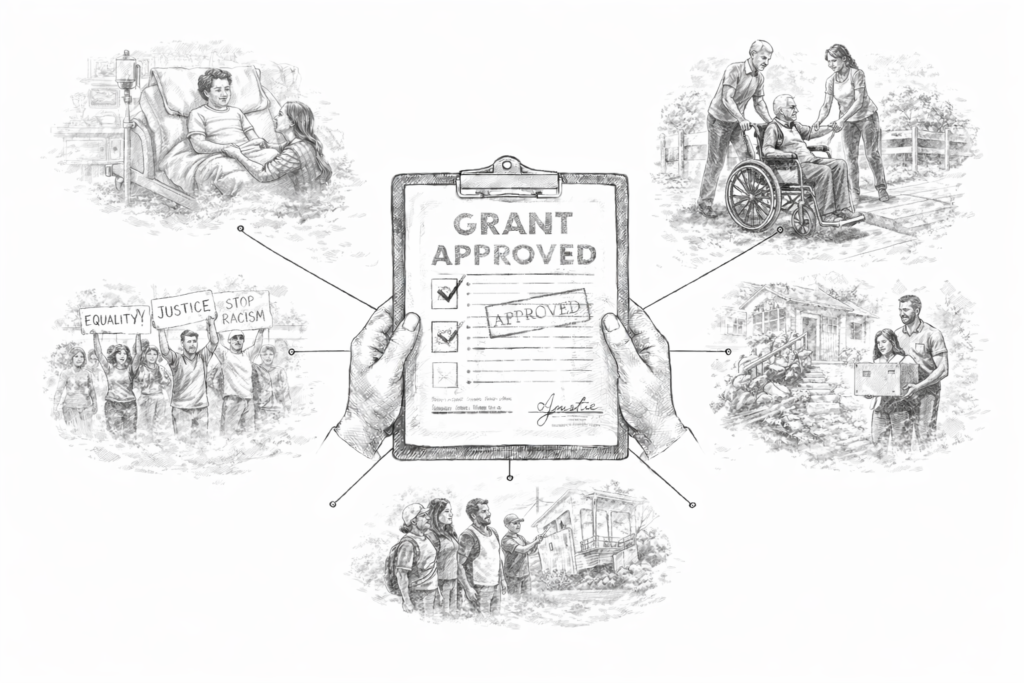
    In the global landscape, and particularly within India’s shifting regulatory environment, the finance professional has moved from the “back office” to the center of strategic decision-making. As funding becomes more tied to specific outcomes, the person who understands the flow of capital becomes the person who determines the scale of the mission.

    The Core Pillars of the Role

    Non-profit finance is fundamentally different from the corporate world because it focuses on Stewardship rather than profit. It involves managing a complex “capital stack” that includes restricted grants, individual donations, and sometimes earned income.

    • Fund Stewardship: You are responsible for ensuring “Restricted Funds” are used exactly as promised. If a donor gives money for rural sanitation, your systems must ensure it isn’t diverted to urban education.
    • Strategic Compliance: Especially in India, navigating the Foreign Contribution Regulation Act (FCRA) and tax exemptions is a high-stakes game. You are the shield that protects the organization from legal risks that could shut it down.
    • Sustainability Planning: You move the organization away from a “month-to-month” survival mindset by building reserves, managing cash flow, and creating long-term financial models.
    • Impact Auditing: Beyond financial audits, you help measure the “Social Return on Investment” (SROI), providing the data that proves to the world that the organization’s programs are actually working.

    Why Finance is the Great “Hidden Multiplier”

    This career is often underestimated because its impact is indirect. You aren’t the one treating the patient, but you are the one ensuring the medicine was bought at the best price and that the clinic has enough “runway” to stay open next year.

    The leverage here is massive. A skilled Finance Director who finds a way to optimize tax structures or improve procurement efficiency by 15% has effectively “donated” a massive sum of money back to the mission without a single fundraising event. In a sector where resources are perpetually scarce, this kind of efficiency is a moral imperative.

    The Impact Ecosystem: Where do you fit?

    Finance roles in this sector are diverse and allow you to choose the “flavor” of impact you want to have:

    1. Grassroots NGOs: Here, you are a generalist, building the first formal systems for an organization and moving them from “informal trust” to “professional accountability.”
    2. Philanthropic Foundations: You act as a “Financial Program Officer,” vetting the health of other NGOs before the foundation commits millions in capital.
    3. Social Enterprises: You manage the “Double Bottom Line,” where you have to balance the need for a sustainable business model with the delivery of a social good.
    4. Multilateral Agencies: At places like the World Bank or large climate funds, you work on “Macro-Finance,” moving billions of dollars toward national infrastructure or global health goals.

    Advantages: Why Choose This Path?

    • A Seat at the Table: Finance leads are almost always part of the core leadership team. You aren’t just a “support” person; you are a strategic advisor to the CEO.
    • Measurable Success: In a sector where “impact” can sometimes feel vague, your success is clear. A balanced budget, a clean audit, and a healthy reserve are objective wins.
    • Global Portability: Financial literacy is a universal language. The skills you learn managing a budget in Mumbai are 90% transferable to an NGO in London or Nairobi.
    • Recession-Proof Impact: Even when programmatic trends change, the need for someone to manage the money never goes away.

    The Hard Truths: Challenges and Risks

    This role carries a heavy weight. You are often the “Guardian of the No,” forced to tell passionate program heads that their new project isn’t financially viable. This can lead to internal friction and requires a high degree of emotional intelligence to navigate.

    Furthermore, the pressure of compliance is real. In many countries, financial reporting errors aren’t just “mistakes”—they are legal liabilities that can jeopardize the entire organization’s existence. It is a career of high responsibility, often with very little public recognition, requiring someone who finds satisfaction in the “quiet win.”

    Is Development Finance a Good Fit for You?

    This career suits a specific archetype: the Practical Idealist. You should consider this path if:

    • You are energized by data and find “stories” in numbers that others miss.
    • You have an unshakable ethical compass and value transparency above all else.
    • You want to be a leader but prefer the role of the “Architect” behind the scenes rather than the “Orator” on the stage.
    • You can stay calm under the pressure of tight deadlines and complex regulatory audits.

    Final Reflection: The Morality of the Spreadsheet

    Ultimately, a budget is a statement of intent. It shows exactly what an organization cares about. By choosing a career in Development Finance, you become the person who ensures that “good intentions” are backed by “solid foundations.” You aren’t just managing money; you are managing the lifeblood of social change.

  • Grantmaking

    Grantmaking

    Is Grantmaking the Most Strategic Way to Deploy Capital?

    If fundraising is the art of gathering resources, Grantmaking is the science of deploying them. Grantmaking sits at the core of Capital Philanthropy, acting as the bridge between large pools of wealth and the organizations that can turn that wealth into social change. A grantmaker (often called a Program Officer) is a professional gatekeeper who must decide: Which problems are the most urgent? Which organizations are the most effective? And how can our capital unlock the greatest possible impact?

    In the modern landscape, grantmaking has evolved from simple “check-writing” to Strategic Philanthropy. It involves deep research, sector-mapping, and building long-term trust with grassroots leaders. It is a career for the “Intellectual Activist”—someone who wants to see the big picture of a social issue and use financial leverage to solve it at the root.

    The Strategic Architecture of Grantmaking

    Grantmakers do not just wait for applications; they proactively shape the sectors they fund. Their work involves several key dimensions:

    • Sector Mapping & Strategy: Researching an entire ecosystem—such as “Primary Education in Rural India”—to identify where the gaps are and where a grant would do the most good.
    • Due Diligence: Rigorously vetting an organization’s leadership, financial health, and “Theory of Change” to ensure the funds will be managed responsibly.
    • Grant Design: Structuring the funding—whether it is “Restricted” (for a specific project) or “Unrestricted” (for the organization’s core growth)—to maximize the grantee’s success.
    • Impact Evaluation: Working with partners to track progress, learn from failures, and gather data that can influence government policy or other donors.

    Why Grantmaking is a High-Leverage Career

    Grantmaking offers a unique form of “Portfolio Impact.” While a leader of an NGO focuses on one organization, a grantmaker focuses on a portfolio of ten, twenty, or fifty organizations. By choosing which ones to fund, you are effectively “curating” the social sector.

    • Risk Capital: Grantmakers can fund experimental ideas that governments or businesses won’t touch. You have the power to provide the “seed money” for the next world-changing innovation.
    • Ecosystem Building: Beyond money, grantmakers provide “Non-Financial Support,” such as connecting their grantees to experts, media, or other donors. You are a “Platform Builder” for social change.

    Where Grantmaking Roles Exist

    This career path is found within the most influential institutions in the Capital Philanthropy world:

    1. Private Foundations: Working for family-led or corporate-backed foundations (e.g., Azim Premji Foundation, Bill & Melinda Gates Foundation).
    2. Bilateral & Multilateral Agencies: Deploying government-to-government aid or large-scale development funds (e.g., USAID, World Bank).
    3. Community Foundations: Managing funds that are raised from and deployed within a specific city or region to solve local problems.
    4. Intermediary Organizations: Working for “Regranting” organizations that pool money from many donors to fund smaller, hard-to-reach grassroots groups.

    Advantages: The View from the 30,000-Foot Level

    • Systems-Level Perspective: You get to see how different organizations, government policies, and market forces interact. You learn “what works” across an entire sector.
    • High Strategic Influence: You aren’t just a donor; you are a partner. You can help shape the strategy of the organizations you fund, helping them think bigger and more sustainably.
    • Intellectual Rigor: You are constantly learning. One week you might be studying water table depletion, and the next, you’re looking at digital literacy for women.
    • Resource Power: You have the privilege of moving significant amounts of money toward the people and causes that need it most.

    The Hard Trade-offs: The Burden of the Gatekeeper

    The most difficult part of grantmaking is the Power Imbalance. Because you hold the money, people will rarely tell you the “ugly truth” about their challenges. This can create a “Philanthropy Bubble” where you are disconnected from the reality on the ground. It requires an incredibly humble and self-aware leader to break through this.

    Additionally, you are the “Professional Rejector.” For every grant you approve, you might have to say “no” to twenty other deserving organizations. This can be emotionally taxing and requires a clear, objective framework to ensure your decisions are fair and transparent.

    Is Grantmaking a Good Fit for You?

    This path is designed for the “Humble Strategist.” You should consider this career if:

    • You are an avid researcher who loves to “nerd out” on data, policy reports, and organizational models.
    • You are comfortable with Indirect Impact—you find joy in being the person who makes others successful.
    • You are a strong communicator who can bridge the gap between the boardroom of a foundation and the field office of an NGO.
    • You have a “Nose for Talent”—you can spot a great leader and a sustainable model even when it’s in its early, messy stages.

    Final Reflection: Deployment as a Responsibility

    Grantmaking is not just about “giving away money”; it is about the Responsible Stewardship of Capital. In a world of limited resources, every dollar misallocated is a missed opportunity to save a life or fix a system. By choosing a career in Grantmaking, you are taking on the responsibility of ensuring that the world’s wealth is used as a force for justice.

  • Fundraising

    Fundraising

    Could Fundraising be the Lifeblood of Global Progress?

    In the impact sector, a mission without capital is merely a wish. Fundraising—often more strategically called Resource Mobilisation—is the bridge between the world’s most pressing problems and the capital required to solve them. Far from the stereotype of “asking for money,” modern fundraising is about building long-term, value-based partnerships. It is the art of storytelling backed by data, designed to convince individuals, corporations, and foundations to invest in a better future.

    In the Indian and global context, the landscape of philanthropy is shifting. We are moving away from simple “charity” toward “impact investing,” “venture philanthropy,” and “collaborative giving.” This makes the fundraiser a critical strategic architect who doesn’t just find money, but manages the Capital Philanthropy ecosystem to ensure an organization’s longevity and independence.

    The Strategic Pillars of Resource Mobilisation

    A sophisticated fundraising department operates like a high-end business development unit, but with a social soul. It involves several distinct strategic workstreams:

    • Individual & Retail Giving: Building a “tribe” of thousands of small donors who provide the unrestricted “community capital” that allows an organization to innovate.
    • Institutional & Grant Fundraising: Navigating the complex world of large foundations (like Gates or Rockefeller) and bilateral agencies, requiring high-level technical writing and logical frameworks.
    • Corporate Social Responsibility (CSR): Partnering with businesses to align their statutory spending or ESG goals with on-ground social impact, particularly relevant in the Indian legal context.
    • Strategic Events & Major Gifts: Cultivating High-Net-Worth Individuals (HNWIs) and family offices, which requires deep relationship management, trust-building, and high-level networking.

    Why Fundraising is a High-Impact Leadership Role

    Fundraising is the ultimate Growth Lever. While a program manager improves a single project, a fundraiser creates the “fuel” that allows the entire organization to double or triple its reach. In the world of social change, capital is often the primary bottleneck; by breaking that bottleneck, the fundraiser enables everything else to happen.

    Furthermore, fundraisers act as the Voice of the Market. They are the ones who hear from donors about global trends, new technologies, and shifting priorities. They bring this “outside-in” perspective back to the organization, helping program teams stay relevant, accountable, and focused on outcomes that the world is willing to support.

    Where Resource Mobilisation Roles Exist

    This career path offers opportunities across the entire Capital Philanthropy spectrum:

    1. Non-profits & NGOs: Leading “Development” or “Advancement” teams to secure the annual operating budget and endowment.
    2. Philanthropic Intermediaries: Working for organizations that pool capital from multiple donors to solve large-scale problems (e.g., Dasra, Co-Impact).
    3. Universities & Research Labs: Raising “Deep Tech” or academic capital to fund the next generation of scientific breakthroughs.
    4. Social Impact Funds: Helping “Impact Investors” find the right balance between financial returns and social Resource Mobilisation.

    Advantages: Why Pursue this Path?

    • Clear, Measurable Impact: Your success is not abstract. You can point to a $10M grant and know exactly how many schools or clinics it will fund.
    • High Market Demand: There is a chronic shortage of professional, strategic fundraisers in the social sector. High-quality talent in this field is often the highest-paid and most sought-after.
    • Networking at the Highest Levels: You spend your time talking to CEOs, philanthropists, and world leaders. This builds incredible “Social Capital” and a global network.
    • Entrepreneurial Freedom: Fundraising is essentially “sales for the soul.” It rewards creativity, persistence, and an entrepreneurial mindset.

    The Hard Trade-offs: Resilience and the “Rejection Game”

    The most significant challenge in fundraising is the Psychological Toll of Rejection. You will hear “no” far more often than “yes.” This requires a thick skin and an unshakable belief in the cause. It is also a role with high external pressure; if the fundraising targets are not met, the entire organization—and the people it serves—feels the impact.

    Additionally, there is the constant challenge of Ethical Alignment. Fundraisers must navigate the “Grey Zones” of accepting money from certain donors while ensuring the organization’s mission remains uncompromised. This requires high integrity and the courage to turn down money when it doesn’t align with the organization’s values.

    Is Fundraising a Good Fit for You?

    This path is designed for the “Persuasive Idealist.” You should consider this career if:

    • You are a natural storyteller who can make people feel the urgency of a problem and the hope of a solution.
    • You enjoy building and maintaining relationships over years, not just weeks.
    • You are comfortable with “the ask” and don’t view money as a taboo topic.
    • You are data-driven; you understand that a compelling story needs to be backed by a “Theory of Change” and clear impact metrics.

    Final Reflection: Resource Mobilisation as an Act of Empowerment

    Fundraising is not about “begging” for money; it is about offering people the opportunity to be part of something great. By choosing a career in Resource Mobilisation, you are empowering donors to use their wealth for a purpose higher than themselves. You are the architect of the partnerships that make the impossible, possible.

  • Monitoring & Evaluation

    Monitoring & Evaluation

    Is Monitoring & Evaluation (M&E) the Reality Check for Social Change?

    In the social sector, there is often a massive gap between what a program intends to do and what it actually achieves. Monitoring & Evaluation (M&E) is the professional discipline of closing that gap. It is the “Internal Auditor of Impact” within the Program Design, Evidence & Impact Measurement category. While others focus on the excitement of launching new projects, the M&E professional focuses on the truth of the results, ensuring that organizations learn from their failures and double down on their successes.

    In today’s global impact landscape, donors no longer just ask “How did you spend the money?”—they ask “What actually changed?” M&E is the function that answers that question with hard evidence, moving the sector away from “feel-good stories” toward “verified outcomes.”

    The Strategic Framework of M&E

    A robust M&E system is built on two distinct but connected pillars that operate throughout a program’s lifecycle. Monitoring (The Pulse) is the continuous, real-time tracking of activities—ensuring health workers show up or books are delivered. Evaluation (The Verdict) is the periodic, in-depth assessment of a program’s overall effectiveness, proving that the positive change in a community was actually caused by the program and not by outside factors.

    Key components of this framework include:

    • The LogFrame & Theory of Change: Designing the logical blueprints that connect “Inputs” (money/staff) to “Outputs” (activities) and finally to “Impact” (long-term change).
    • Data Management Systems: Building the digital infrastructure—often using mobile tools like ODK or CommCare—to collect clean data from the field and turn it into actionable dashboards.

    Why M&E is the “Brain” of Program Design

    M&E is the primary tool for institutional learning; without it, an organization is flying blind. It acts as the accountability lever, providing the proof that allows donors to keep funding the mission and protecting the organization’s reputation. By identifying what isn’t working early, M&E professionals save organizations from wasting years of effort and millions in resources on ineffective strategies.

    Furthermore, good M&E isn’t just for the boardroom. It provides field workers with the data they need to understand their own performance and improve their service delivery. It transforms raw data into a compass for the entire team.

    Where the Opportunities Exist in the Evidence Ecosystem

    M&E professionals are the most “in-demand” specialists across the social sector today. Opportunities are found in International NGOs and UN Agencies, where you manage massive, multi-country M&E frameworks that report back to global stakeholders. Alternatively, M&E Consultancies like Kantar Public or Sambodhi specialize in doing independent third-party evaluations for the sector.

    Many professionals also work within Government Departments to design monitoring systems for national welfare schemes, tracking “last-mile” delivery. Newer models like Social Impact Bonds also rely on M&E data to determine whether a service provider gets paid based on verified success.

    Advantages: The Credibility of the Truth-Teller

    The primary advantage of this path is high strategic leverage. You are the person who tells the leadership what is actually happening, giving you unique influence over the future direction of the organization. Because every single non-profit, foundation, and CSR wing needs M&E, your skillset is universal and applicable in any issue area—from wildlife conservation to women’s rights.

    This role also offers objectivity and authority. Your work is based on evidence, and in a world of opinions, being the “Data Person” gives you a seat at the table in high-level policy discussions. You get to see the inner workings of many different programs, giving you a deep understanding of why some social interventions fail while others thrive.

    The Hard Trade-offs: The “Police” Perceptions and Data Fatigue

    The biggest challenge in M&E is the perception gap. Field teams often view M&E as “internal police” sent to find their mistakes rather than a tool to help them. This requires an M&E leader with high emotional intelligence to build a culture where data is used for learning, not for blaming.

    Additionally, there is the risk of “data for data’s sake.” Many organizations collect mountains of information that no one ever reads. The M&E professional must fight to keep systems simple, relevant, and focused on the metrics that actually drive decision-making.

    Is Monitoring & Evaluation a Good Fit for You?

    This path is designed for the “Inquisitive Realist.” You should consider this career if you are the person who always asks, “Wait, how do we actually know this is working?” It requires someone who loves organizing data but also respects the “messy” reality of field work.

    Key traits for success include:

    • The “Critical Friend” Mindset: Someone who can deliver hard truths to leadership in a way that is constructive and solution-oriented.
    • Technological Comfort: A desire to find better ways to collect, clean, and visualize information using modern tools.
    • Logical Rigor: An ability to see the connection between a small daily activity and a massive long-term goal.

    Final Reflection: Evidence as a Tool for Justice

    Ultimately, M&E is about accountability to the beneficiary. In a sector where the “customers” don’t pay for the service, M&E is the only mechanism that ensures they are getting the quality they deserve. By choosing a career in M&E, you aren’t just managing data; you are ensuring that the promise of social change is actually kept.

  • Development Economics

    Development Economics

    Is Development Economics the Ultimate Blueprint for Solving Poverty?

    Development Economics is the study of why some nations thrive while others struggle, and more importantly, what specific interventions can bridge that gap. It is the intellectual backbone of the Program Design, Evidence & Impact Measurement category. While a sociologist might look at the “what” and “why” of a social issue, a Development Economist looks at the incentives, trade-offs, and systemic barriers that keep people in poverty.

    This career is for the “Macro-Strategist”—someone who wants to use rigorous academic tools to design policies that don’t just help one village, but lift entire regions out of poverty. In the Indian and global context, this field has moved from theoretical models in ivory towers to “Randomized Control Trials” (RCTs) in the field, making it one of the most practical and evidence-driven paths in the social sector.

    The Strategic Pillars of Development Economics

    Development economists work at the intersection of data, human behavior, and public policy. Their work generally falls into these critical workstreams:

    • Impact Evaluation (RCTs): Using gold-standard scientific methods to test if a program actually works. For example, does giving free uniforms increase school attendance more than deworming tablets?
    • Behavioral Economics: Studying how psychological biases affect economic decisions—such as why farmers might not adopt life-saving insurance even when it is subsidized.
    • Market Systems Analysis: Identifying bottlenecks in local markets—like a lack of credit or poor transport—that prevent small businesses from growing.
    • Policy Design & Advocacy: Taking field evidence and translating it into “Policy Briefs” that help governments decide how to spend billions in public welfare budgets.

    Why Development Economics is a High-Leverage Career

    This role offers a unique form of “Institutional Impact.” By proving that a specific intervention works, a development economist can influence where trillions of dollars in global aid and government spending are directed.

    • Evidence-Based Design: You ensure that programs are built on logic and proven results rather than “gut feeling” or political pressure.
    • Cost-Effectiveness Mastery: You help organizations understand not just “did this work,” but “was this the best use of our money compared to other options?”
    • Scalability: When you find a “proven” model, you provide the evidence needed for it to be adopted by the World Bank or national governments, scaling the impact to millions.

    Where the Opportunities Exist

    This career path allows you to work at the highest levels of global and local policy:

    1. Research Labs & Think Tanks: Working with organizations like JPAL (Abdul Latif Jameel Poverty Action Lab), IPA (Innovations for Poverty Action), or Brookings.
    2. Multilateral Organizations: Influencing global development at the World Bank, IMF, or various United Nations agencies.
    3. Government Advisory: Working within “NITI Aayog” or state-level planning boards to design and evaluate social welfare schemes.
    4. Philanthropic Foundations: Helping large donors decide which “High-Impact” interventions to fund based on the latest economic research.

    Advantages: The Power of the “Evidence Architect”

    • Global Credibility: A background in economics is one of the most respected “passports” in the social sector. You can work in any country on almost any issue area.
    • High Intellectual Rigor: You are at the cutting edge of social science. Your work contributes to the global body of knowledge on how to end poverty.
    • Objective Influence: Your arguments aren’t just opinions; they are backed by regressions, data, and peer-reviewed evidence. This makes you a powerful advocate in any room.
    • Systems-Level Change: You have the opportunity to fix broken systems at the national or global level, rather than just treating the symptoms of poverty.

    The Hard Trade-offs: The “Missing Human” and Ethical Complexity

    The biggest challenge in this field is the Reductionism of Data. In the search for statistical significance, the complex, messy, and emotional reality of human life can sometimes be lost. There is a risk of treating people as “subjects” in an experiment rather than partners in change.

    Additionally, the “Academic-Action Gap” can be frustrating. A development economist might find the “perfect” solution, but political realities or corruption might prevent it from ever being implemented. It requires a leader who is patient enough to navigate slow-moving bureaucracy while maintaining the rigor of their research.

    Is Development Economics a Good Fit for You?

    This path is designed for the “Rigorous Visionary.” You should consider this career if:

    • You love math and statistics but want to apply them to human welfare rather than stock market trends.
    • You are a “Why” person—you aren’t satisfied with knowing a program worked; you want to know the exact mechanism of how it worked.
    • You are comfortable with “Slow Impact”—you understand that high-quality research and policy shifts take years to bear fruit.
    • You are an “Evidence-First” thinker—you are willing to admit a program is failing if the data proves it, even if you were personally invested in it.

    Final Reflection: Economics as an Act of Justice

    Ultimately, Development Economics is about Efficiency in the Service of Humanity. In a world where 700 million people still live in extreme poverty, wasting resources on ineffective programs is not just a mistake—it is a tragedy. By choosing this career, you are ensuring that the world’s limited resources are used as effectively as possible to create a more equitable future.

  • Data Science for Social Good

    Data Science for Social Good

    Is Data Science the Most Objective Tool for Social Change?

    In the social sector, decisions have traditionally been made based on intuition, anecdotes, or political will. Data Science for Social Good (DSSG) changes this by bringing the rigor of predictive modeling, machine learning, and advanced analytics to the world’s most complex problems. This isn’t about profit optimization; it’s about Optimization for Impact. It is a career for the “Social Scientist with Code”—someone who wants to find the signal in the noise to determine where a hunger relief truck should go or which students are at the highest risk of dropping out.

    Operating within the Program Design, Evidence & Impact Measurement category, this role serves as the analytical brain of an organization. It bridges the gap between raw field data and strategic action, ensuring that “evidence-based” is not just a buzzword, but a functional reality.

    The Strategic Pillars of Data Science in the Impact Sector

    Data Science in this field goes beyond simple “reporting.” it is about using computational power to solve human problems through several key workstreams:

    • Predictive Analytics: Building models to anticipate crises before they happen—such as predicting disease outbreaks, harvest failures, or identifying households likely to fall back into poverty.
    • Targeting & Resource Allocation: Using geospatial data and demographic modeling to ensure that limited resources (like vaccines or solar lamps) reach the most marginalized “last-mile” populations.
    • Natural Language Processing (NLP): Analyzing thousands of field reports, feedback surveys, or policy documents to extract trends and sentiment that would be impossible for a human to read manually.
    • Experimental Design (A/B Testing): Running digital and field-based trials to compare different program versions, helping organizations double down on what actually works.

    Why Data Science is a High-Leverage Career

    Data Science offers a form of “Efficiency Impact.” In a sector where every rupee or dollar is precious, being 10% more accurate in targeting can save thousands of lives.

    • Evidence-Based Program Design: You ensure that programs are designed based on what the data says people need, rather than what donors think they need.
    • Real-Time Impact Measurement: Traditionally, impact was measured years after a project ended. Data scientists build dashboards that allow for “Course Correction” in real-time, preventing wasted effort.
    • Systemic Influence: Your findings can be used to advocate for policy changes at the government level, using hard evidence to shift national budgets toward more effective interventions.

    Where the Opportunities Exist

    This career path is rapidly expanding as organizations realize the power of their own data:

    1. Global NGOs & Think Tanks: Working on large-scale data sets for organizations like the UN, World Bank, or JPAL to measure poverty and development.
    2. Health-Tech & Agri-Tech Social Enterprises: Using data to improve crop yields for smallholder farmers or diagnostic accuracy in rural clinics.
    3. Gov-Tech Partnerships: Working with state governments to clean and analyze public data to improve the delivery of social welfare schemes.
    4. Specialist DSSG Agencies: Joining organizations like DataKind or IDinsight that act as “Data Consultancies” for the entire social sector.

    Advantages: The Power of the “Analytical Activist”

    • High Market Value: Data science is one of the most well-paid and respected skills globally. Pursuing this in the social sector allows you to have a “corporate-level” skill set with a “mission-driven” purpose.
    • Objective Influence: Your arguments are backed by math. This gives you a unique level of authority when speaking to donors, CEOs, or government officials.
    • Cross-Sector Versatility: The algorithms used to predict credit-worthiness in microfinance can be adapted to predict health outcomes. Your skills are universally applicable.
    • Discovery Potential: You are the person most likely to find the “Hidden Truths”—the counter-intuitive insights that can change how an entire sector thinks about a problem.

    The Hard Trade-offs: Data Ethics and “Garbage In, Garbage Out”

    The biggest challenge in this field is Data Quality. In the social sector, data is often messy, missing, or biased. You spend 80% of your time cleaning data and 20% analyzing it. There is also the significant risk of “Algorithmic Bias”—if your data is biased against a certain community, your model will be too.

    Furthermore, there is a risk of Technocentrism. Data cannot capture the full human experience. A data scientist must stay humble enough to realize that a “statistical outlier” is a real person with a real story. Balancing the cold logic of a model with the warm reality of human empathy is the hardest part of the job.

    Is Data Science for Social Good a Good Fit for You?

    This path is designed for the “Compassionate Quant.” You should consider this career if:

    • You love Python, R, or SQL, but you’re bored of using them to increase “click-through rates” for ads.
    • You have a “Skeptic’s Mind”—you aren’t satisfied with a story until you see the statistical significance.
    • You are a “Translator”—you can take a complex regression analysis and explain it in simple terms to a field worker or a donor.
    • You are patient; you understand that social data is messy and that finding the truth takes time.

    Final Reflection: Truth in Numbers

    Data Science for Social Good is about bringing Truth to Power. In a world of “fake news” and “vanity metrics,” the data scientist is the guardian of what is actually happening on the ground. By choosing this career, you aren’t just coding; you are building the evidence base for a more just and effective world.

  • Policy

    Policy

    Is Policy the Ultimate Blueprint for Scaling Change?

    If direct service is about helping people within the current system, Policy is about changing the system itself. Operating within the Policy, Governance & Systems Change category, this career focuses on the laws, regulations, and institutional frameworks that govern society. It is the path for the “Systems Architect”—someone who understands that while feeding one hundred people is vital, changing the agricultural policy that caused their hunger can feed millions.

    In a global context, policy work is the bridge between grassroots evidence and national-scale implementation. It involves navigating the complex world of government bureaucracies, research institutions, and advocacy groups to ensure that public resources are used effectively and equitably.

    The Strategic Pillars of Policy Work

    Policy professionals act as the connective tissue between data and political action. Their work is rarely about a single event but rather a continuous cycle of research and negotiation.

    • Policy Analysis & Research: Evaluating existing laws and using data to predict the impact of proposed changes. This involves “nitty-gritty” work like budget analysis and legislative tracking.
    • Advocacy & Strategic Communication: Translating complex research into “Policy Briefs” and narratives that convince lawmakers, the media, and the public to support a specific direction.
    • Stakeholder Engagement: Building coalitions between civil society, the private sector, and government departments to create a unified front for change.
    • Government Relations: Navigating the hallways of power to provide technical assistance to bureaucrats and elected officials who are designing new schemes.

    Why Policy is a High-Leverage Career

    Policy work offers a form of “Institutional Leverage.” When a policy change is successfully implemented, it becomes the new “default” for an entire state or country.

    The impact of a single policy shift can dwarf decades of direct service. For example, a policy that mandates fortifying salt with iodine can prevent millions of cases of developmental delay more efficiently than individual health clinics ever could. It is the science of the “multiplier effect”—using the machinery of the state to sustain impact long after a specific grant or project has ended.

    Where Policy Leaders Drive Change

    The demand for policy expertise exists across several high-impact environments:

    1. Think Tanks & Research Institutes: Organizations like CPR (Centre for Policy Research) or the Brookings Institution that conduct deep-dive research to influence public discourse.
    2. Multilateral Agencies: Working with the UN or the World Bank to set global standards on climate, health, or human rights.
    3. Advocacy NGOs: Organizations that represent marginalized groups, ensuring their voices are heard during the drafting of new legislation.
    4. Government Advisory Units: Working directly within “NITI Aayog” or Chief Ministers’ offices to help design and monitor large-scale public welfare programs.

    Advantages: The Power of the “Macro-Strategist”

    The primary advantage of this path is the scale of the “win.” A successful policy intervention can affect millions of lives simultaneously. This career also provides a deep understanding of power—how it is held, how it is exercised, and how it can be shifted.

    Because policy skills are highly intellectual and technical, they command significant respect and offer high career capital. You develop the ability to see the world not as a collection of random events, but as a series of interconnected systems that can be redesigned for the better.

    The Hard Trade-offs: Incrementalism and the “Long Game”

    The biggest challenge in policy is the Time Horizon. Change at the systemic level is notoriously slow and often frustrating. You might spend five years working on a single amendment that gets blocked at the last minute due to a change in political leadership.

    Furthermore, success in policy is often “anonymous.” The credit for a successful law usually goes to a politician, not the policy analyst who wrote the first draft. It requires a leader with a “marathon mindset”—someone who is comfortable with incremental progress and who finds satisfaction in the quiet, structural victory.

    Is Policy Work a Good Fit for You?

    This path is designed for the “Patient Architect.” You should consider this career if you find yourself constantly asking, “Why is the system set up this way in the first place?”

    Key traits for success include:

    • Political Savvy: An ability to understand the motivations of different players and find “win-win” compromises.
    • Exceptional Communication: The ability to write clearly and speak persuasively to diverse audiences—from grassroots activists to senior bureaucrats.
    • Intellectual Stamina: The patience to read through thousand-page bills and dry data sets to find the one insight that matters.
    • Resilience: The emotional strength to keep pushing for change even when the political climate is unfavorable.

    Final Reflection: Policy as the Architecture of Justice

    Ultimately, policy is the tool we use to write our values into law. It is the difference between “charity,” which is optional, and “justice,” which is systemic. By choosing a career in Policy, you are choosing to be one of the architects of a society where the default setting is fairness and opportunity for all.